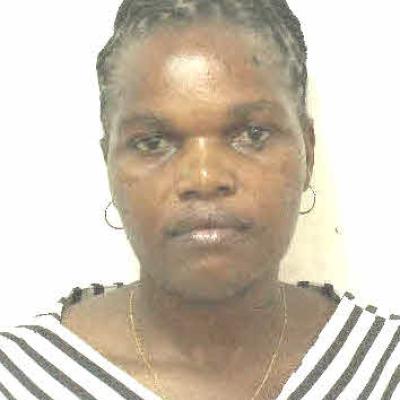
Resize the picture

Name
Faustine Bwire Masath

Academic Rank

Department
Educational Psychology and Curriculum Studies (EPCS)

Biography

Biography

Faustine Bwire Masath (Ph.D. in Psychology) is a lecturer at the University of Dar es Salaam, Tanzania. He holds a PhD (Dr. rer. nat.) from the University of Bielefeld in Germany (2022) and a Master’s degree in Applied Social Psychology (2011), as well as a Bachelor’s degree in Educational Psychology (2008), both from the University of Dar es Salaam in Tanzania. Currently, he serves as the Coordinator for the Centre for Research on Child Protection and Violence Prevention (CPVP) at the Dar es Salaam University College of Education (DUCE). His research broadly focuses on children and adolescents development, violence in general, violence against children and adolescents, mental health, stress and trauma, and teacher education. 

Contacts

Email:

Email Address
faustine.masath@udsm.ac.tz

Mob:

Research Interest

Research Interest
children and adolescents development, violence in general, violence against children and adolescents, and mental health

Google Scholar

View Profile

Projects

Publications

Publications
  1. Masath, F. B., & Hecker, T. (in press). Students’ Exposure to Violent Discipline in School and their Attitudes towards Violent Discipline by Teachers. International Journal of Child Maltreatment: Research, Policy and Practices

  2. Masath, F. B., & Hecker, T. (2025). Exploring the cycle of violence: Own childhood experiences of violence and attitudes towards violence relate to female caregivers’ violent discipline. Child Protection and Practice, 6, 100209. https://doi.org/10.1016/j.chipro.2025.100209

  3. Masath, F. B., & Mlyakado, B. P. (2025). Anger Management and Social Integration as Determinants of Resilience among University Students Victims of Intimate Partner Violence in Tanzania. Journal of Interpersonal Violence. https://doi.org/10.1177/08862605251329493

  4. Rashid, N., Masath, F. B., & Nkuba, M. (2024). Pre-primary school children’s psychological wellbeing and their association with Kiswahili pre-reading outcomes in Tanzania. Cogent Psychology, 11(1). https://doi.org/10.1080/23311908.2024.2330243 

  5. Masath, F. B., Mattonet, K., Hermenau, K., Nkuba, M., & Hecker, T. (2023). Reducing Violent Discipline by Teachers: a Matched Cluster-Randomized Controlled Trial in Tanzanian Public Primary Schools. Prevention Sciencehttps://doi.org/10.1007/s11121-023-01550-0 

  6. Masath, F. B., Scharpf, F., Dumke, L., & Hecker, T. (2023). Externalizing problems mediate the relation between teacher and peer violence and lower school performance. Child Abuse & Neglect, 135(November 2022), 105982. https://doi.org/10.1016/j.chiabu.2022.105982

  7. Masath, F. B. (2023). Moderating Effect of Mental Health on the Association between Teachers’ Stress and their Professional Attitude in Tanzania. Papers in Education and Development, 40(2), 117–134. https://journals.udsm.ac.tz/index.php/ped/article/view/5470/4587

  8. Masath, F. B., Nkuba, M., & Hecker, T. (2023). Prevalence of and factors contributing to violent discipline in families and its association with violent discipline by teachers and peer violence. Child Abuse Review, e2799(October), 1–13. https://doi.org/10.1002/car.2799

  9. Scharpf, F., Mueller, S. C., Masath, F. B., Nkuba, M., & Hecker, T. (2021). Psychopathology mediates between maltreatment and memory functioning in Burundian refugee youth. Child Abuse and Neglect, 118. https://doi.org/10.1016/j.chiabu.2021.105165 

  10. Hecker, T., Dumke, L., Neuner, F., & Masath, F. B. (2021). Mental health problems moderate the association between teacher violence and children’s social status in East Africa: A multi-informant study combining self- and peer-reports Tobias. Development and Psychopathology, 1–10. https://doi.org/10.1017/S095457942000228X

  11. Scharpf, F., Mkinga, G., Masath, F. B., & Hecker, T. (2020). A socio-ecological analysis of risk, protective and promotive factors for the mental health of Burundian refugee children living in refugee camps. European Child and Adolescent Psychiatry, 0123456789. https://doi.org/10.1007/s00787-020-01649-7