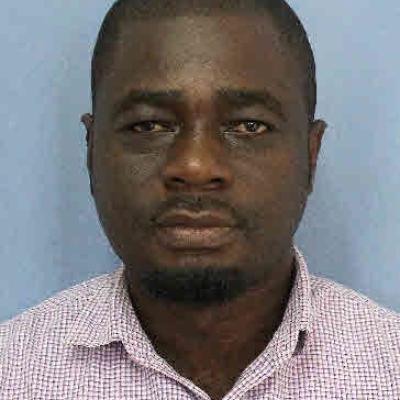
NkubaM picture

Name
Mabula George Nkuba

Academic Rank

Department
Educational Psychology and Curriculum Studies (EPCS)

Biography

Biography

Dr. Mabula Nkuba is a Senior Lecturer, He hold a PhD in psychology from the University of Konstanz, Germany obtained in 2017. Before his PhD, Dr. Nkuba studied a Master degree in Arts and Applied Social Psychology in 2009 and a Bachelor of Science with Education(Bsc.Ed) in 2007 from the University of Dar es Salaam. He is currently the Dean – Faculty of Education and has previously served as the Coordinator for Demonstration Schools from September, 2022 to date, Associate Dean in the Faculty of Education (2011- 2013), Examination Officer in the Faculty of Education (2009 -2011), and Teaching Practice Coordinator (2010 -2011). Apart from the administrative positions, Dr. Nkuba has been a member of different committees and Boards at the College and outiside the College.

Dr. Nkuba’s research interest includes parenting psychology, child violence protection as well  as children's mental health as linked to schooling. For the previous 10 years, He spent his time investigating the prevalence and factors associated with child violence in Tanzanian families, schools and alternative care settings. In collaboration with other researchers across the globe such as from the University of Konstanz-Germany, University of Bielefeld – Germany, University of Ghana, University of Kyambogo and Mbarara University of Science and Technology in Uganda, he developed, implemented and evaluated a child violence prevention intervention approach for teachers "Interaction Competences with Children for Teachers (ICC-T" relevat for managing discipline in schools. 


He then participated in testing a violence prevention model "Interaction competence with children for Care givers (ICC-C)" in Tanzania in 2018 to year 2020. He is currently involved in a team to test the feasibility of a new model "Interaction competence with children for Parents (ICC-P) in Tanzania. Dr. Nkuba's emphasis is on the use of effective and non-violent discipline strategies in managing children's misbehavior both in homes and schools. His beliefs have been on the use of positive attention and active ignoring as opposed to violent discipline strategies, permissible parenting and child neglect as strategies for discipline management in different settings. 

Contacts

Email:

Email Address
ngelela40@gmail.com

Mob:

Research Interest

Research Interest
Parenting psychology, child violence protection as well  as children's mental health as linked to schooling

Google Scholar

View Profile

Projects

Projects

a) Co-PI: The effects of violence and maltreatment on the development and well-being of children: experimental approaches to studying the causal effects of maltreatment reduction (subprojects in Tanzania), March, 2021 to date.

 b) PI: Protecting Our Students in Schools (POSS): A Digitalized Intervention for Reporting Students' Misbehaviour, Absenteeism and Dropout for Schools to         Education Officers in Tanzania, February, 2022 to 2022.

 c) Co-PI: Digitalizing Our Schools for Success (DOSS): An Intervention Approach for Reducing School Dropout through Improved Communication Systems between Teachers and Students' Parents in Tanzania, January, 2021 to March, 2022.

d) Co-I: End line evaluation of the Best Model for the Best Alternative Education Pathway for Out of    School Girls and Teen Mothers in Tanzania, July, 2020 to December, 2020.            Commissioned by TENMENT to DUCE.

e) PI: Teachers and Parents Collaborative Inquiry (TPC-I): An intervention approach for identifying burdened school children, reducing children's problems in secondary schools and improving school outcomes, March, 2020 to March, 2021.

Publications

Publications
  1. Onditi, H., Mwandambo, I., Nkuba, M., Mlyakado, B., Masath, F & Kyaruzi, E. (2025). Community perspectives on Female Genital Mutilation in the Kuria community in Kitunda – Dar es Salaam City, Tanzania. Culture, Health & Sexuality . https://doi.org/10.1080/13691058.2025.2537394

 2.Florian, F., Hecker, T., Hermenau, K., Teicher, M., Mikinga, G., Nkuba, M., Masath, F., Schalinski, I. (2024). Child maltreatment in a high adversity context: Associations of age, type and timing of exposure with psychopathology in middle childhood. Child Abuse & Neglect. https://doi.org/10.1016/j.chiabu.2024.107060


3. Rashid, N., Masath, F. B., & Nkuba, M. (2024). Pre-primary school children’s psychological wellbeing and their association with Kiswahili pre-reading outcomes in Tanzania. Cogent Psychology, 11(1). https://doi.org/10.1080/23311908.2024.2330243


4. Kabelege, E., Kirika, A., Nkuba, M., Hermenau, K., Schreiber, A., Hoeffler, A & Hecker, T (2024). Improving Parent-Child Interaction and Reducing Parental Violent

Discipline – a Multi-Informant Multi-Method Pilot Feasibility Study of a School-Based Intervention. Journal of Family Violence, https://doi.org/10.1007/s10896-023-00679-4 


5. Scharpf, F., Masath., F.B., Mkinga, G., Kyaruzi, E., Nkuba, M., Machumu, M. & Hecker, T. (2023). Prevalence of suicidality and associated factors of suicide risk in a representative community sample of families in three East African refugee camps. Social Psychiatry and PsychiatricEpidemiology. Vol.1(1-15), doi.org/10.1007/s00127-023-02506-z


6. Hecker, T., Masath, F., Ssenyonga, J., Nkuba, M., & Hermenau., K. (2023). Teacher Violence: A Global Perspective on Prevalence, Contributing Factors, Consequences and Prevention. Oxford University Press. Chapter in a book; Psychological Perspective on Understanding and Addressing Violence Against Children: Towards Building Culture of Peace. Doi:10.1093/med-psych/9780197649510.001.0001.


7. Masath, F.B., Mattonet, K., Hermenau, H., Nkuba, M., Hecker, T. (2023). Reducing Violent Discipline by Teachers: A Matched Cluster‑Randomized Controlled Trial in Tanzanian Public Primary Schools. Prevention Science, 1(1-12). doi.org/10.1007/s11121-023-01550-0


8. Masath, F. B., Hinze, L., Nkuba, M., & Hecker, T. (2022). Factors contributing to violent discipline in the classroom: Findings from a representative sample of primary school teachers in Tanzania. Journal of Interpersonal Violence, 37 (17-18)NP15455-NP15478.doi:10.1177 08862605211015219[IF: 6.144]

9. Masath, F. B., Nkuba, M., &Hecker, T. (2022). Prevalence of and factors contributing to violent discipline in families and its association with violent discipline by teachers and peer violence. Child Abuse Review, e2799. doi: 10.1002/car.2799

10. Mkinga, G., Kirika, A., Nkuba, M., Mgode, S., Huth, M., &Hecker, T. (2022). Caregiver-specific         factors and orphanage-context factors contributing to maltreatment of children in institutional   care: A multi-level analysis of 24 orphanages in Tanzania. Developmental Child Welfare, 4  (2), 154-173doi: 10.1177/25161032221099979


11. Hecker., T, Mkinga., G, Hartmann., E, Nkuba., M, Hermenau., K. (2022). Sustainability of            effects and secondary long-term outcomes: One-year follow up of a cluster-randomized   controlled trial to prevent maltreatment in institutional care. PLOS Glob Public Health    2(5): https://doi.org/10.1371/journal.pgph.0000286

12. Ssenyonga, J., Hermenau K., Mattonet, K., Nkuba, M., Hecker, T. (2022). Reducing          teachers’ use of violence toward students: A cluster-randomized controlled trial in    secondary schools in Southwestern Uganda. Children and Youth Services Review.             https://doi.org/10.1016/j.childyouth.2022.106521

13. Scharpf, F, Mueller, S. C, Masath, F.B, Nkuba, M, Hecker, T. (2021). Psychopathology           mediates           between maltreatment and memory functioning in Burundian refugee youth. Child Abuse &  Neglect. https://doi.org/10.1016/j.chiabu.2021.105165

14. Nkuba, M. (2021).Teachers Attitude towards caning: Do the differences in their socio-       demographic characteristics really matters?. Journal of Education, Humanities and        Social Sciences. 10(3), pp. 19 -34.

15. Hecker, T, Mkinga, G, Kirika, A, Nkuba, M, Preston, J, Hermenau, K. (2021). Preventing         maltreatment in institutional care: A cluster randomized controlled  trial in East        Africa.  Preventive Medicine Reports. https://doi.org/10.1016/j.pmedr.2021.101593

16. Scharpf, F, Kirika, A, Masath, F.B., Mkinga, G, Ssenyonga., J., Nyarko-Tettehe, E., Nkuba,      M,        Karikari, A.K., Hecker, T. (2021). Reduicing physical and emotional violence         by teachers        using the intervention Interaction Competencies with Children for  Teachers (ICC-T): Study    protocol of multi-country cluster randomized controlled             trial in Ghana, Tanzania,            and Uganda. BMC Public Health. https://doi.org/10.1186

17.Masath, F. B., Hermenau, K., Nkuba, M., & Hecker, T. (2021). Factors contributing to              Violent disciplines in the classroom: Findings from a representative sample of primary school teachers in Tanzania. Journal of Interpersonal Violence. SAGE. DOI: 10.1177_08862605211015219

18. Masath, F. B., Hermenau, K., Nkuba, M., & Hecker, T. (2020). Reducing violent discipline by teachers using Interaction Competencies with Children for Teachers           (ICC-T): Study protocol for a matched cluster randomized controlled trial in    Tanzanian         public primary schools. Trials, 21, 4. doi: 10.1186/s13063-019-3828-z    [IF: 2.067]

19. Goessman, K., Hermenau, K., Nkuba, M., Ssenyonga, J., & Hecker, H. (2020). Sexual   violence            among youth in two East African countries: Perpetrators, contributing           factors, and mental        health associations. Child Abuse & Neglect.  https://doi.org/10.1016/j.chiabu.2020.104711

20. Nkuba, M., Hermenau, K. & Hecker, T. (2019). The association of maltreatment and           Socially            deviant behaviors – Findings from a national study with adolescent students            and their           parents . Mental Health & Prevention, 13(2019), pp. 159-168.             https://doi.org/10.1016/j.mhp.2019.01.003.

21. Ssenyonga, J., Hermenau, K., Nkuba, M., & Hecker, T. (2019). Stress and positive attitudes           towards violent discipline are associated with school violence by Ugandan teachers.     Child Abuse & Neglect 93 (1) 15–26. https://doi.org/10.1016/j.chiabu.2019.04.012

22. Nkuba, M., Hermenau, K., Goessmann, K. & Hecker, T. (2018). Reducing violence by teachers  using the preventive intervention Interaction Competencies with Children for Teachers      (ICC-T): A cluster randomized controlled trial at secondary schools in Tanzania. PLOS        ONE, 13(8), e0201362. doi: 10.1371/journal.pone.0201362 [IF:        2.766]

 23. Ssenyonga, J., Hermenau, K., Nkuba, M., & Hecker, T. (2018). Reducing violence against            children by implementing the preventive intervention Interaction Competencies with         Children for Teachers (ICC-T): Study protocol for a cluster randomized controlled        trial      in Southwestern Uganda. Trials, 19, 435. doi: 10.1186/s13063-018-2827-9 [IF:      2.067]

24.Nkuba, M., Hermenau, K., Goessman, K. & Hecker, T. (2018). Mental health problems and      their association to violence and maltreatment in a nationally representative sample of         Tanzanian secondary school students. Social Psychiatry and Psychiatric        Epidemiology.pp.1-       9.

 25. Hecker, T., Goessman, K., Nkuba, M. & Hermenau, K. (2018). Teachers’ stress intensifies            violent  disciplining in Tanzanian secondary schools. Child Abuse & Neglect, 76(1),   pp.        173-183. http://dx.doi.org/10.1016/j.chiabu.2017.10.019

26.Nkuba, M., Hermenau, K. & Hecker, T. (2018). Violence and maltreatment in Tanzanian families – Findings from a nationally representative sample of secondary school students and their parents . Child Abuse & Neglect, 77(1), pp. 110-120. https://doi.org/10.1016/j.chiabu.2018.01.002 

27. Kaltenbach, E., Hermenau, K., Nkuba, M., Goessmann, K. & Hecker, T. (2018). Improving    interaction competencies with children - A pilot feasibility study to reduce school       corporal punishment. Journal of Aggression, Maltreatment and Trauma, 27 (1), 35-     53.        doi: 10.1080/10926771.2017.1357060 [IF 0.698]

28. Nkuba, M & Kyaruzi, E. (2015). Is it Not Now?School Counselors’ Training in Tanzania             Secondary Schools. Journal of Education and Practice, 6(19), pp. 160-169.

29.Nkuba, M. (2013). Towards Enabling Career Services Delivery in Tanzania Schools: The            Role of Students, Teacher counsellors and Heads of Schools: American Based      Research Journal, 2 (4), 1-13. 

30. Nkuba, M. (2012). Career Services Provision to Secondary School Students in Tanzania: Is it a Dream or Reality? International Journal of Learning and Development, 2 (2),        242- 257. 

31. Nkuba, M. (2012). Promoting Science Subjects choices for secondary school students in     Tanzania: Challenges and Opportunities. Academic Research International, 3 (3), 234-245. 

ORCID: https://orcid.org/0000-0002-9430-5918